










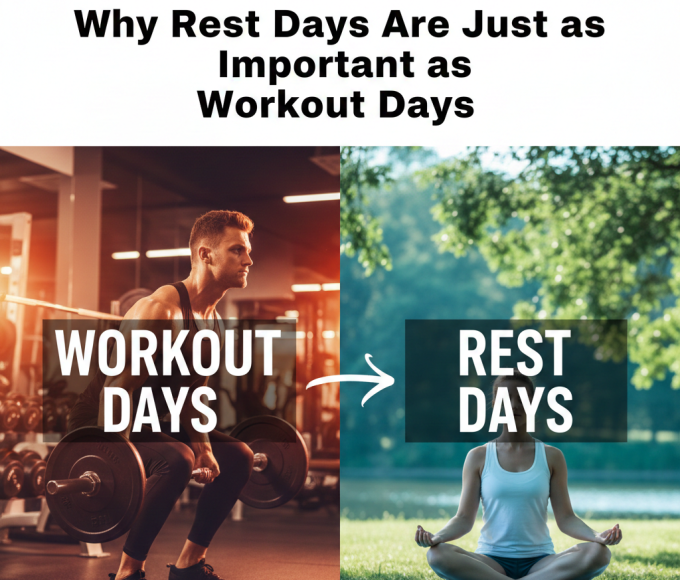











Most people think progress happens during intense workouts — lifting heavy weights, sprinting hard, pushing limits.
But the truth is your gains happen during recovery, not during the workout itself.
And one of the most underrated strategies for speeding up fitness results is active recovery.
It’s not “lazy training.” It’s one of the smartest tools athletes use to stay strong, injury-free, and consistent.
Let’s break down what active recovery is, why it works, and how you can use it to unlock better performance — even on your rest days.
1. What Is Active Recovery?
Active recovery is low-intensity movement performed on your rest days or after intense exercise.
Instead of lying on the couch all day, you gently move your body to increase blood flow and reduce stiffness.
Examples of Active Recovery:
- Light walking
- Cycling at low intensity
- Slow jogging
- Yoga or stretching
- Swimming
- Mobility work
- Light bodyweight exercises
Think of it as giving your body the circulation boost it needs to heal faster.
2. Why Active Recovery Works Better Than Complete Rest
Most soreness is caused by waste buildup in your muscles (like lactic acid) and microscopic tears from training.
Active recovery speeds up the process of healing.
How it helps:
✅ Increases blood flow to muscles
✅ Reduces inflammation and soreness
✅ Boosts nutrient delivery to damaged tissue
✅ Helps remove waste products
✅ Keeps joints loose and mobile
✅ Prevents stiffness the next day
Complete rest has its place, but too much of it can leave your body feeling tight and sluggish.
3. Active Recovery Improves Strength Gains
This might surprise you:
Active recovery doesn’t just reduce soreness — it actually helps build more strength over time.
Here’s why:
- Your muscles repair faster
- You maintain better mobility
- You stay fresh for your next workout
- You avoid overtraining and injury
When you recover well, you can lift heavier, run faster, and train harder in your next session.
Consistency → Better performance → Faster results
4. Reduces the Risk of Injury
Many injuries happen because:
- Muscles are tight
- Joints have limited mobility
- The body is still inflamed from previous workouts
Active recovery keeps everything moving smoothly.
It gently stretches your muscles and lubricates your joints, lowering your injury risk.
5. Boosts Mental Relaxation and Stress Relief
Training hard can spike cortisol (stress hormone).
Active recovery helps lower stress by calming your nervous system through gentle movement.
Great options include:
🧘♀️ Slow yoga
🌬 Deep breathing
🚶♂️ A quiet walk outdoors
🎧 Stretching with music
You feel refreshed instead of burnt out.
6. Best Active Recovery Workouts
Here are simple routines you can use on rest days:
A. 20-Minute Light Cardio Routine
- 5 minutes slow walking
- 10 minutes easy cycling or jogging
- 5 minutes breathing/stretching
B. 15-Minute Full Body Mobility
- Neck circles – 1 min
- Shoulder rolls – 2 min
- Hip circles – 2 min
- Cat–Cow stretch – 2 min
- Hamstring stretch – 3 min
- Quad stretch – 2 min
- Deep breathing – 3 min
C. Recovery Yoga Flow
Gentle poses like:
- Child’s Pose
- Downward Dog
- Cobra Pose
- Forward Fold
- Supine Twist
Perfect for evening relaxation.
7. Signs You Need More Active Recovery
Your body will tell you when to slow down.
Watch for:
🚩 Constant muscle soreness
🚩 Fatigue that lasts more than 48 hours
🚩 Stiff joints
🚩 Decreased performance
🚩 Trouble sleeping
🚩 Low motivation
These are signs of overtraining — and active recovery can fix it.
Conclusion
Active recovery isn’t a “lazy workout.”
It’s a powerful training strategy used by athletes, bodybuilders, and fitness enthusiasts to perform better and stay consistent.
By adding just 20 minutes of light movement on rest days, you can:
✨ Reduce soreness
✨ Build more strength
✨ Improve mobility
✨ Boost energy
✨ Prevent injury
Remember:
It’s not just how hard you train… it’s how well you recover.








Leave a comment