












When most people think of core training, they immediately think of crunches, sit-ups, and long, painful planks. But here’s the truth: you don’t need traditional ab exercises to build a strong, stable, powerful core.
Your core is more than just your “abs.” It’s a system of deep muscles that support your spine, hips, posture, and every movement you make — from walking to lifting groceries to working out.
The best part?
You can strengthen your entire core using functional movements, most of which don’t feel like ab exercises at all.
Let’s break it down.
👉 What Exactly Is Your Core? (More Than Just Abs!)
Your core includes:
- Transverse abdominis (deep stabilizer muscles)
- Obliques
- Rectus abdominis (“six-pack” muscles)
- Lower back muscles
- Glutes
- Hip stabilizers
This means core training isn’t just about flattening your stomach — it’s about:
✓ Preventing back pain
✓ Improving posture
✓ Enhancing strength and power
✓ Increasing balance and mobility
✓ Performing better in workouts and daily life
🔥 Why You Don’t Need Crunches to Build Core Strength
Traditional ab exercises mainly target surface-level muscles.
Functional movements target your deep stabilizers, which are much more important.
Crunches = only work small areas
Functional core exercises = train your whole torso to work as one unit
This leads to:
- Better overall strength
- Improved athletic performance
- A stronger back
- A more defined waistline over time
💪 Best Core-Building Exercises (No Crunches, No Sit-Ups)
Here are powerful, beginner-friendly exercises that train your core naturally:
1. Dead Bug (Anti-Extension Strength)
The dead bug forces your core to stabilize while your limbs move — one of the most effective core exercises ever created.
How to do it:
- Lie on your back
- Lift arms straight up and bend knees at 90°
- Slowly extend opposite arm and leg
- Return and switch sides
Why it works:
Strengthens deep core muscles without stressing the spine.
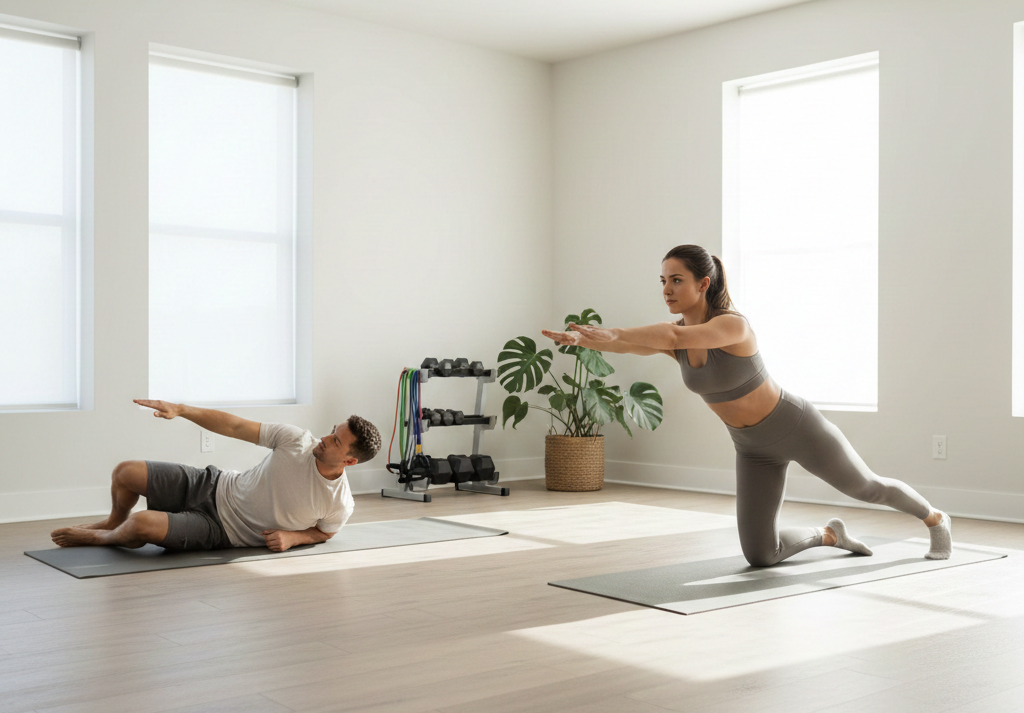
2. Bird Dog (Core + Balance + Back Strength)
Great for posture, lower back strength, and stabilizing muscles.
How to do it:
- On all fours
- Extend opposite arm and leg
- Keep hips level
- Switch sides
Why it works:
Improves coordination, balance, and full torso control.
3. Glute Bridge (Glutes = Your Real Power Center)
Many people overlook the glutes — but they’re one of the most important parts of the core.
How to do it:
- Lie on back
- Knees bent
- Lift hips
- Squeeze glutes at the top
Why it works:
Strengthens hips, lower back, and deep stabilizers.
4. Farmer’s Carry (Functional Core Training)
This exercise teaches your core to stay strong while your body moves.
How to do it:
- Hold weights in both hands
- Walk slowly with tension
- Keep posture tall
Why it works:
One of the best total-body core movements.
5. Side Plank (Obliques + Spine Stability)
Much safer and more effective than crunches.
How to do it:
- Lie on side
- Lift body off the ground
- Keep straight line
Why it works:
Strengthens the side of the core and stabilizes your spine.
🔥 Beginner-Friendly Core Routine (No Traditional Ab Exercises)
Do this 3–4 times per week:
| Exercise | Time/Reps |
|---|---|
| Dead Bug | 3×10 per side |
| Bird Dog | 3×10 per side |
| Glute Bridge | 3×15 |
| Side Plank | 2×20–30 sec per side |
| Farmer’s Carry | 2×30–45 sec |
Total time: 10–12 minutes
🧠 Why These Exercises Work Better Than Crunches
They build a core that:
- Protects your spine
- Supports your daily movement
- Improves athletic performance
- Makes your body feel stronger and more stable
Crunches only hit one small area.
Functional core work trains your body as a system — the way you’re meant to move.
📌 Conclusion
You don’t need endless crunches to build a strong, powerful core.
By using functional movements like dead bugs, bird dogs, and farmer’s carries, you train the muscles that truly matter, the ones that support your entire body.
These exercises are safer, more effective, and give better long-term results.
A strong core = a stronger you.








Leave a comment