










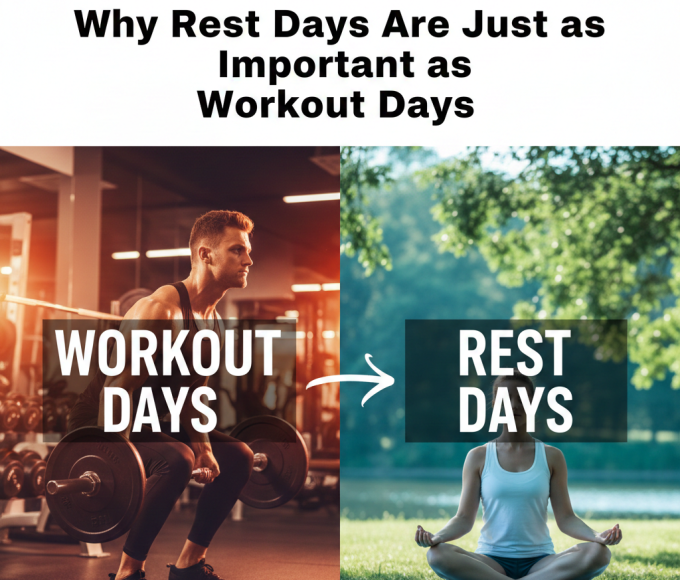










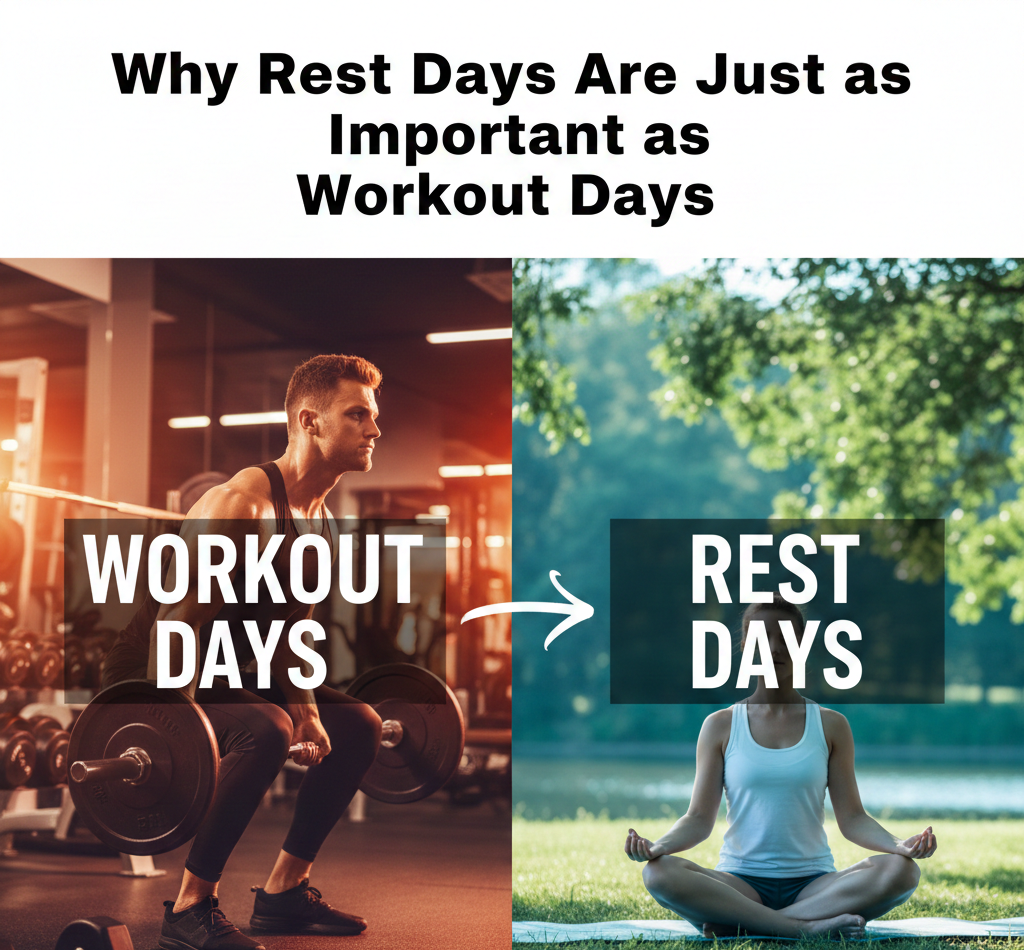
Many people believe that working out every day leads to faster results. In reality, training without rest can slow your progress and increase your risk of injury. Rest days are not a sign of weakness. They are a critical part of every successful fitness routine.
In this post, you will learn why rest days matter, what happens when you skip them, and how to use rest days to improve strength, fat loss, and overall health.
1. What Happens to Your Body During Exercise
When you exercise, your muscles experience small tears. This is normal and necessary for growth. However, muscles do not grow during workouts. They grow during rest.
Rest allows your body to:
- Repair muscle tissue
- Rebuild stronger muscles
- Restore energy levels
- Balance hormones
- Reduce inflammation
Without rest, your body never fully recovers.
2. Why Skipping Rest Days Slows Progress
Training every day without rest can cause:
- Constant fatigue
- Muscle soreness that never goes away
- Poor workout performance
- Increased injury risk
- Burnout and loss of motivation
More workouts do not always mean better results.
3. Rest Days Help Prevent Injuries
Rest days give your joints, tendons, and muscles time to recover.
Common injuries from overtraining include:
- Knee pain
- Lower back pain
- Shoulder strain
- Muscle pulls
Rest keeps your body strong and protected.
4. Rest Days Improve Strength and Muscle Growth
Strength improves when muscles recover fully.
Benefits of proper rest:
- Better muscle growth
- Increased strength
- Improved endurance
- Better workout quality
A rested body performs better than a tired one.
5. Rest Days Support Fat Loss
Rest days help control hormones related to fat storage.
Proper rest:
- Lowers stress hormones
- Improves metabolism
- Reduces cravings
- Prevents overeating
When stress stays high, fat loss becomes harder.
6. Types of Rest Days
Not all rest days are the same.
Complete Rest
No exercise at all. Ideal after intense training.
Active Rest
Light movement like walking or stretching. Helps blood flow and recovery.
Both types are useful depending on your routine.
7. How Many Rest Days Do You Need Per Week
For most people:
- Beginners need 2 to 3 rest days
- Intermediate trainers need 1 to 2 rest days
- Advanced trainers still need at least 1 rest day
Your body tells you when it needs rest. Learn to listen.
8. Signs You Need a Rest Day
Take a rest day if you feel:
- Constant soreness
- Poor sleep
- Low motivation
- Weak workouts
- Increased irritability
Ignoring these signs leads to setbacks.
9. What to Do on Rest Days
Rest days do not mean being lazy.
Good rest day activities:
- Light walking
- Stretching
- Foam rolling
- Deep breathing
- Quality sleep
Rest days help you recharge physically and mentally.
10. How Rest Improves Long Term Consistency
People who rest properly:
- Stay injury free longer
- Enjoy workouts more
- Stay consistent for months and years
- Build sustainable fitness habits
Consistency always beats intensity.
Conclusion
Rest days are just as important as workout days. They allow your body to recover, grow stronger, burn fat efficiently, and stay injury free. If you want long term fitness success, treat rest as part of your training plan.
Train hard, but recover smarter.








Leave a comment