
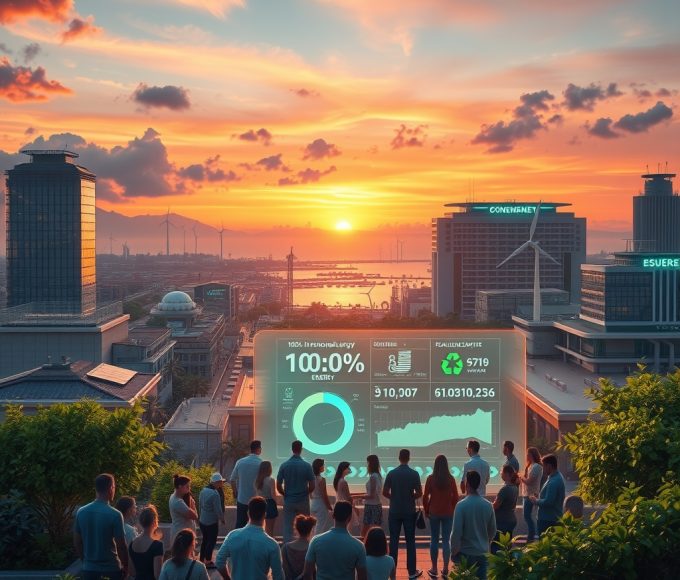






















As the world grapples with the challenges of climate change, environmental degradation, and social inequality, it has become increasingly clear that technology will play a crucial role in shaping a sustainable future. From renewable energy systems to advanced water management technologies, innovations in the tech sector are providing new solutions to some of humanity’s most pressing problems. The integration of technology into our daily lives is not only transforming the way we live and work but also offering unprecedented opportunities for sustainable development.
The Rise of Renewable Energy
The shift towards renewable energy sources is one of the most significant trends in the move towards a sustainable future. Technologies such as solar, wind, and hydroelectric power are becoming increasingly cost-competitive with fossil fuels, making them more accessible to communities around the world. This transition is not only reducing our reliance on non-renewable resources but also decreasing greenhouse gas emissions and mitigating the impact of climate change.
Advancements in Energy Storage
A key factor in the widespread adoption of renewable energy is the development of advanced energy storage systems. Batteries and other storage technologies are improving rapidly, allowing for more efficient and reliable storage of energy generated from renewable sources. This means that even when the sun is not shining or the wind is not blowing, we can still power our homes, businesses, and industries with clean energy. Such advancements are crucial for creating resilient and sustainable energy systems.
Sustainable Water Management
Water scarcity affects millions of people worldwide, and the efficient management of this precious resource is critical for sustainable development. Technology is offering innovative solutions, from advanced desalination plants to smart irrigation systems that minimize waste and optimize water use. These technologies not only help in conserving water but also ensure that this vital resource is available for future generations.
Role of AI and Data Analytics
Artificial intelligence (AI) and data analytics are playing pivotal roles in managing water resources more sustainably. AI can predict water demand, detect leaks, and optimize water distribution networks, reducing losses and improving efficiency. Data analytics helps in understanding consumption patterns, identifying areas of high usage, and implementing targeted conservation measures. By leveraging these technologies, cities and communities can make informed decisions about water management, leading to more sustainable practices.
Empowering Communities Through Technology
Technology has the power to empower communities and individuals, providing them with the tools and knowledge necessary to contribute to sustainable development. Digital platforms and social media are raising awareness about environmental issues, mobilizing support for conservation efforts, and facilitating the sharing of sustainable practices. Furthermore, technologies like blockchain are being explored for their potential to promote transparency and accountability in supply chains, helping to combat deforestation, illegal fishing, and other environmentally destructive practices.
As we move forward, it’s essential to recognize that the path to a sustainable future is not just about adopting new technologies but also about ensuring that these technologies are accessible, equitable, and beneficial to all. By harnessing the power of technology in a responsible and inclusive manner, we can create a world that is not only more sustainable but also more just and prosperous for everyone. The future we envision is one where technology and nature coexist in harmony, where innovation serves the greater good, and where the well-being of the planet and its inhabitants is the guiding principle behind every advancement.








Leave a comment