






















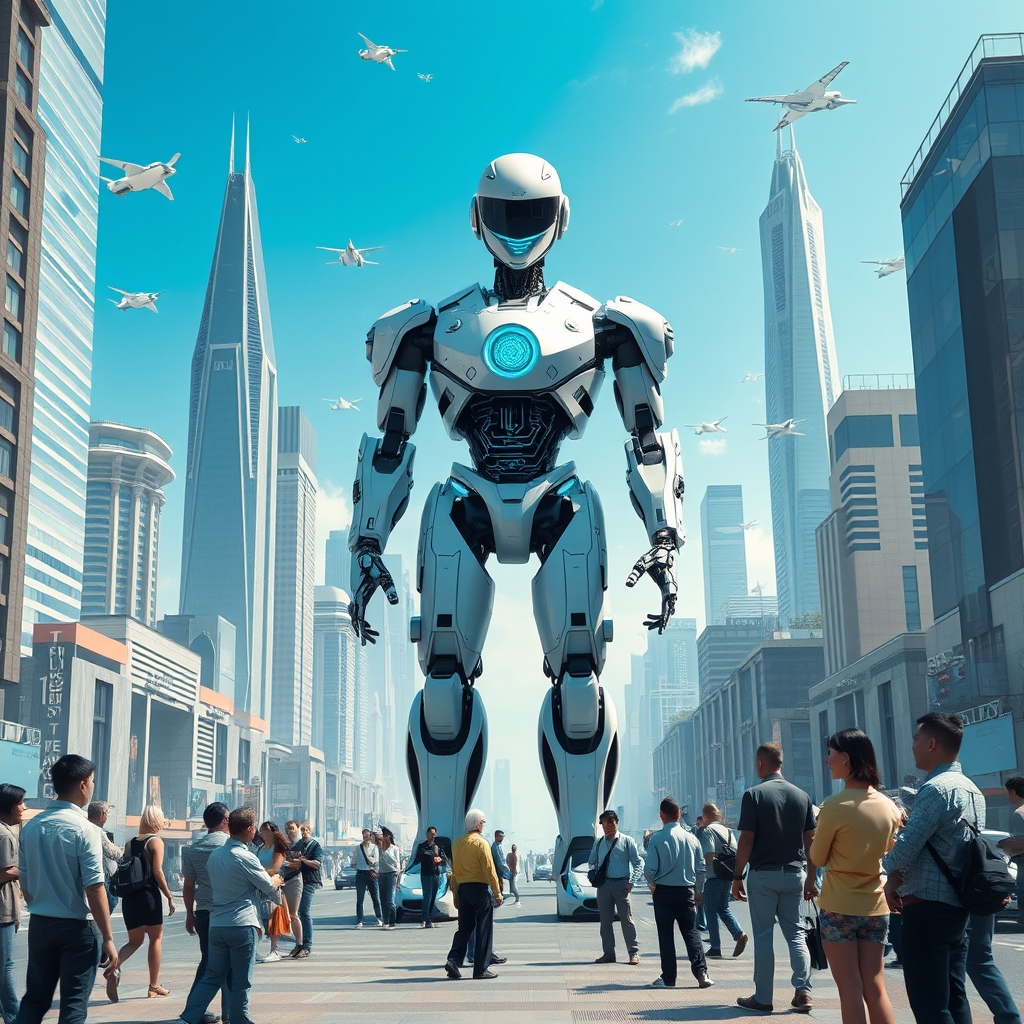
Artificial intelligence (AI) has become an integral part of modern society, transforming the way we live, work, and interact with one another. From virtual assistants like Siri and Alexa to self-driving cars and personalized product recommendations, AI is everywhere, and its influence is only growing. As AI continues to advance and improve, it’s essential to understand its impact on our daily lives and the world at large.
The Benefits of AI
One of the most significant advantages of AI is its ability to automate repetitive and mundane tasks, freeing up humans to focus on more complex and creative endeavors. For instance, AI-powered chatbots can handle customer service inquiries, while machine learning algorithms can analyze vast amounts of data to identify patterns and make predictions. This not only increases efficiency but also enables businesses to make more informed decisions.
Improving Healthcare
AI is also revolutionizing the healthcare industry, enabling doctors and researchers to diagnose diseases more accurately and develop more effective treatments. For example, AI-powered algorithms can analyze medical images to detect abnormalities, while natural language processing can help doctors analyze patient data and develop personalized treatment plans. Additionally, AI-powered robots can assist surgeons during operations, reducing the risk of human error and improving patient outcomes.
The Challenges of AI
While AI has the potential to bring about numerous benefits, it also poses significant challenges. One of the most significant concerns is job displacement, as AI-powered automation replaces human workers in various industries. This could lead to significant social and economic disruption, particularly for workers who lack the skills to adapt to an AI-driven economy. Furthermore, there are also concerns about bias and discrimination in AI decision-making, as well as the potential for AI to be used for malicious purposes, such as cyber attacks and surveillance.
Addressing the Challenges
To address these challenges, it’s essential to develop and implement AI in a responsible and transparent manner. This includes ensuring that AI systems are designed and trained to avoid bias and discrimination, as well as providing workers with the skills and training they need to adapt to an AI-driven economy. Additionally, governments and regulatory bodies must establish clear guidelines and regulations for the development and use of AI, to prevent its misuse and ensure that its benefits are shared by all.
The Future of AI
As AI continues to advance and improve, it’s likely that we’ll see even more significant changes in the years to come. For instance, the development of more advanced AI systems, such as those using deep learning and neural networks, could enable AI to learn and adapt at an unprecedented pace. This could lead to breakthroughs in fields such as medicine, finance, and education, and could potentially solve some of the world’s most pressing challenges, such as climate change and poverty.
Ultimately, the impact of AI on modern society will depend on how we choose to develop and use it. If we prioritize transparency, accountability, and responsibility, we can ensure that AI benefits humanity as a whole, rather than just a privileged few. By working together to address the challenges and opportunities presented by AI, we can create a brighter, more equitable future for all, where AI is used to augment and enhance human capabilities, rather than replace them. As we move forward in this new era of AI, it’s essential to remember that the true potential of AI lies not in its ability to replace humans, but in its ability to empower us to achieve greatness, and to create a world that is more just, more equitable, and more prosperous for all.












Leave a comment