






















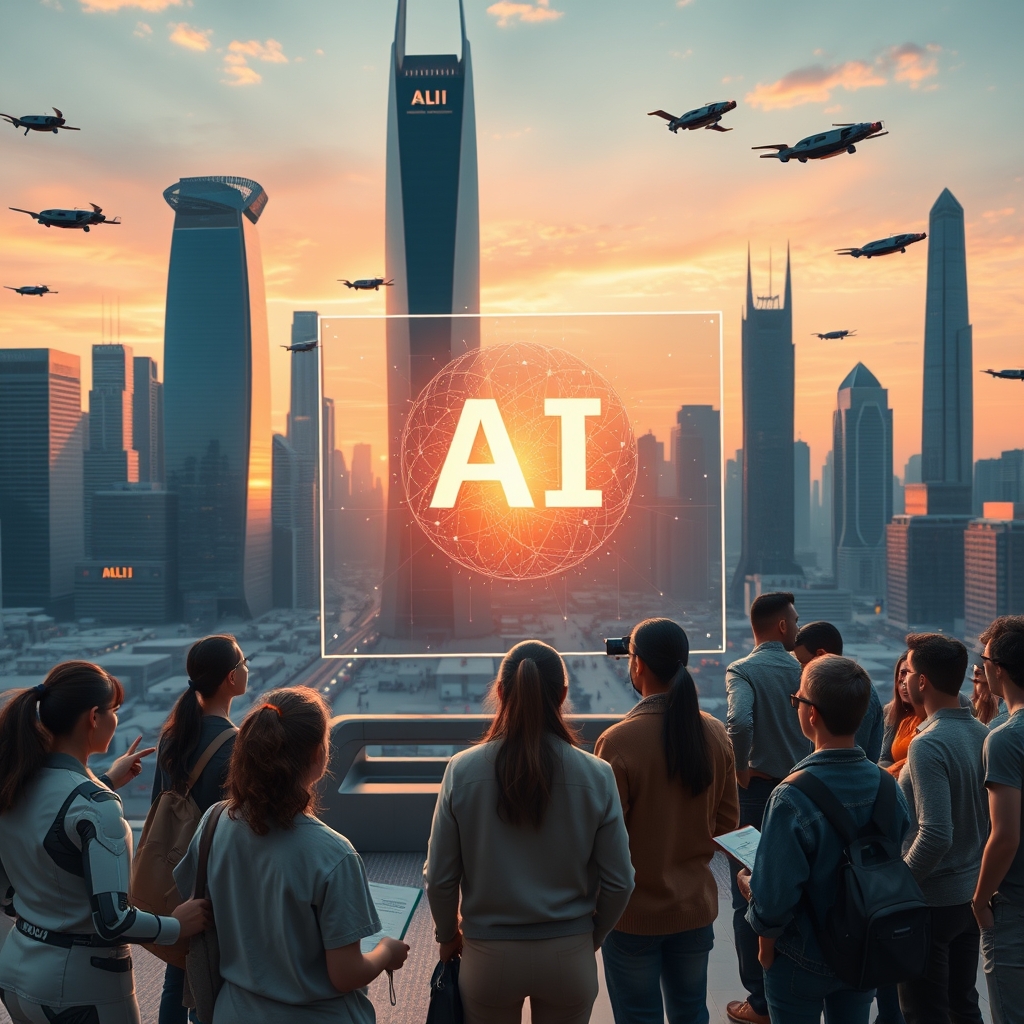
Artificial intelligence (AI) has become an integral part of our daily lives, transforming the way we work, communicate, and interact with one another. From virtual assistants like Siri and Alexa to self-driving cars and personalized product recommendations, AI is revolutionizing various aspects of modern society. The technology has made tremendous progress in recent years, with significant advancements in machine learning, natural language processing, and computer vision.
History of Artificial Intelligence
The concept of AI dates back to the mid-20th century, when computer scientists like Alan Turing and Marvin Minsky began exploring the possibility of creating intelligent machines. The field gained momentum in the 1980s, with the development of expert systems and rule-based reasoning. However, it wasn’t until the 21st century that AI started to gain widespread attention, with the emergence of big data, cloud computing, and deep learning algorithms.
Applications of Artificial Intelligence
AI has numerous applications across various industries, including healthcare, finance, education, and transportation. In healthcare, AI-powered algorithms can analyze medical images, diagnose diseases, and develop personalized treatment plans. In finance, AI can detect fraud, predict stock prices, and optimize investment portfolios. In education, AI can create customized learning experiences, grade assignments, and provide real-time feedback to students.
Benefits and Challenges of Artificial Intelligence
The benefits of AI are numerous, ranging from increased efficiency and productivity to improved decision-making and enhanced customer experiences. However, there are also challenges associated with AI, such as job displacement, bias in decision-making, and cybersecurity risks. As AI becomes more pervasive, it’s essential to address these concerns and develop strategies for mitigating their impact.
The Future of Artificial Intelligence
As AI continues to evolve, we can expect to see significant advancements in areas like natural language processing, computer vision, and robotics. The development of explainable AI (XAI) and transparent AI will become increasingly important, as organizations seek to build trust and accountability in their AI systems. Furthermore, the integration of AI with other technologies like blockchain, the Internet of Things (IoT), and 5G networks will create new opportunities for innovation and growth.
Ultimately, the impact of AI on modern society will depend on how we choose to develop and deploy this technology. By prioritizing transparency, accountability, and ethics, we can harness the potential of AI to create a better future for all. As we move forward, it’s essential to recognize the transformative power of AI and work together to ensure that its benefits are shared by everyone, while minimizing its risks and challenges. This requires a collective effort from governments, industries, and individuals to create a framework that promotes responsible AI development and use, and to address the complex issues that arise from its integration into our daily lives.












Leave a comment