






















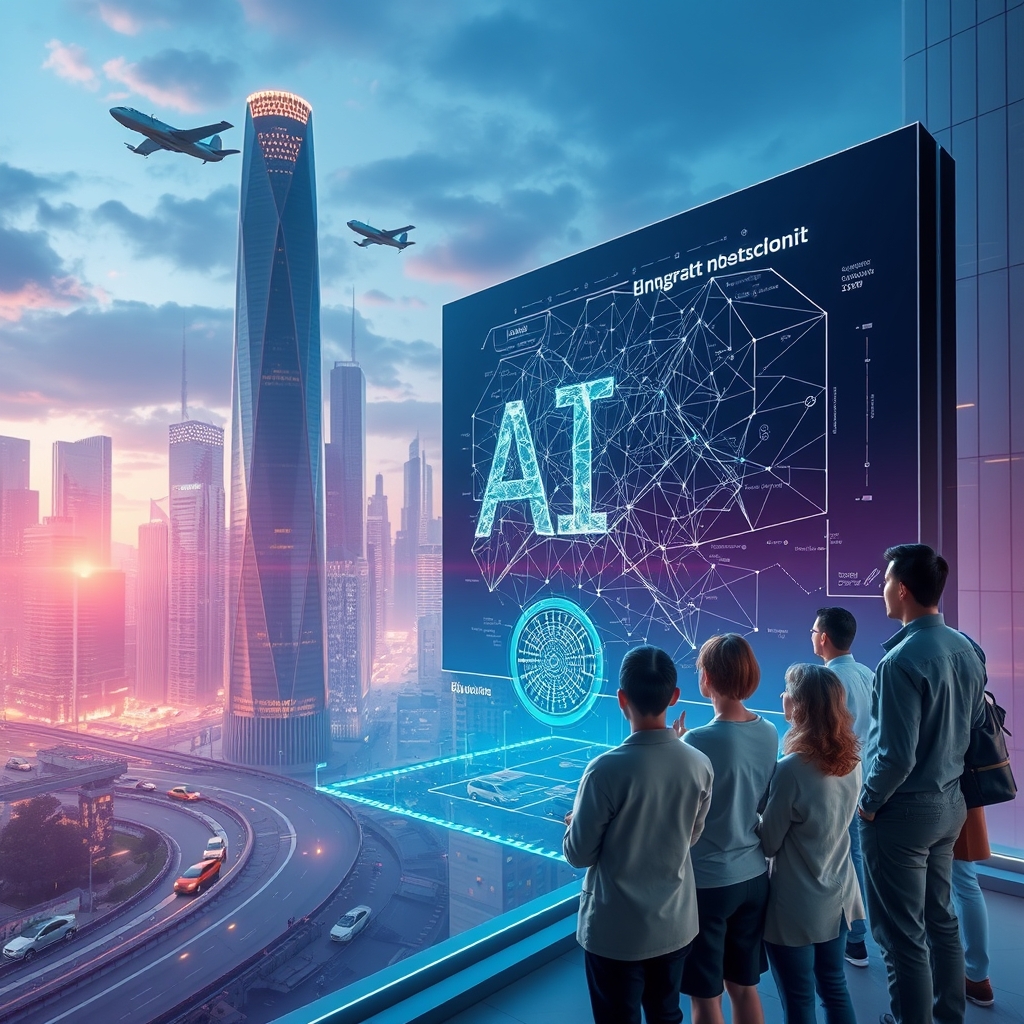
The world of technology is constantly evolving, and one of the most significant advancements in recent years is the development of artificial intelligence (AI). AI has been around for decades, but it’s only in the past few years that we’ve seen its potential truly realized. From virtual assistants like Siri and Alexa to self-driving cars and personalized product recommendations, AI is becoming an integral part of our daily lives.
What is Artificial Intelligence?
Artificial intelligence refers to the development of computer systems that can perform tasks that would typically require human intelligence, such as learning, problem-solving, and decision-making. AI systems use algorithms and data to make predictions, classify objects, and generate insights. These systems can be applied to a wide range of industries, from healthcare and finance to education and transportation.
Types of Artificial Intelligence
There are several types of AI, including narrow or weak AI, which is designed to perform a specific task, such as facial recognition or language translation. General or strong AI, on the other hand, refers to a system that can perform any intellectual task that a human can. Currently, most AI systems are narrow or weak, but researchers are working to develop more general or strong AI systems.
Applications of Artificial Intelligence
AI has a wide range of applications, from virtual assistants and chatbots to predictive analytics and autonomous vehicles. In healthcare, AI can be used to analyze medical images, diagnose diseases, and develop personalized treatment plans. In finance, AI can be used to detect fraud, predict stock prices, and optimize investment portfolios.
Challenges and Limitations
Despite the many benefits of AI, there are also challenges and limitations to its development and deployment. One of the main concerns is the potential for AI to displace human workers, particularly in industries where tasks are repetitive or can be easily automated. There are also concerns about bias and fairness in AI systems, as well as the potential for AI to be used for malicious purposes.
The Future of Artificial Intelligence
As AI continues to evolve and improve, we can expect to see even more innovative applications and uses. One of the most exciting areas of research is in the development of explainable AI, which refers to the ability of AI systems to provide transparent and interpretable explanations for their decisions and actions. This could be particularly important in areas such as healthcare and finance, where trust and accountability are essential.
As we look to the future, it’s clear that AI will play an increasingly important role in shaping our world. Whether it’s through the development of new technologies, the improvement of existing ones, or the creation of new industries and job opportunities, AI has the potential to bring about significant benefits and improvements to our lives. By understanding the evolution of AI and its many applications, we can better appreciate the potential of this technology and work to ensure that its development and deployment are aligned with human values and goals.












Leave a comment